Farmers organize to promote interests

Grassroots participation essential for successful rural development

By Masimba Tafirenyika

Despite repeated pronouncements by governments and donor agencies about the importance of popular participation, Africa's rural producers still generally have little voice in shaping official agricultural and rural development policies. But step by step, farmers' organizations are developing across Africa, and they are more forcefully making the concerns of their members known.

Of the 86 farmers' organizations belonging to the International Federation of Agricultural Producers, 23 are from 19 countries in Africa. In Zimbabwe, 1.3 million households belong to the Zimbabwe Farmers Union (ZFU). With an average of six per family, the ZFU caters to almost 8 million people. In Senegal, the National Council for Rural Unity and Cooperation comprises nine farmers' associations with a combined membership of 3 million.

According to the International Cooperative Alliance, the number of farmers' cooperatives in Africa is smaller than in other regions and accounts for just 6 per cent of the world total, but is still significant: 24,000 cooperative associations, with some 10.4 million members. In some countries, such as Morocco, one in five small-scale farmers belongs to a farmers' organization, most frequently a cooperative.

Pressing for local concerns

Increasingly, such farmers' associations -- as well as the non-governmental organizations (NGOs) that often work with them -- have been pressing governments and donor institutions for policies and programmes more beneficial to small-scale farmers. They are calling, among other things, for a review of marketing regulations; lower duties and taxes on imported machine tools and irrigation equipment; and better access to credit.

Some groups emphasize self-reliance, seeking to close the gap left by cuts in agricultural support services. In Cameroon, for example, the Common Initiative Group of Women Farmers of Bogso promotes the cultivation of local crops, especially cassava. The group has been so successful in producing, processing and marketing cassava that it has been able to finance a school, a library, a processing plant to produce cassava flour and a communal kitchen, as well as to purchase medical supplies.


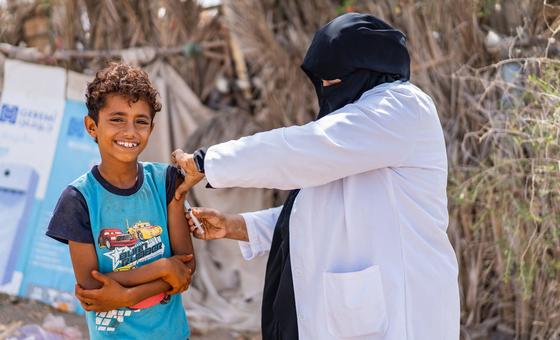
Farmers are joining together to voice their grievances and influence agricultural policies.

Photo: UNICEF


The Organization of Rural Associations for Progress in Zimbabwe has organized more than 2 million villagers through small, autonomous rural groups. Communities are left to draw up their own priorities and much of the organizational decision-making, thus empowering villagers and lessening their dependence on government services.

Government attitudes toward autonomous farmers' organizations vary. At a May 1996 seminar in Cape Verde, representatives of rural organizations from 13 francophone countries in the Sahel and Maghreb regions observed that some countries (Burkina Faso, Niger, Senegal) have long permitted farmers' groups to operate relatively independently. Others, however, have traditionally stressed more centralized planning and tight administrative controls, hampering the development of strong rural organizations.

Positive responses

In Zimbabwe, the powerful ZFU has been able to elicit a positive response from the government. The ZFU's members are now exempt from taxes on agricultural inputs, and the union is currently working with the government to widen the knowledge base of farmers and design appropriate marketing strategies.

Mr. Kudakwashe Matekaire, Director of ZFU, told Africa Recovery that his organization also is "pushing the government to quicken the pace of land resettlement of peasant farmers."

The Cooperative College in Moshi, Tanzania, with technical assistance from the UN Food and Agriculture Organization (FAO), has embarked on an innovative training programme for managers of farmers' organizations and government officials to promote more participatory, member-oriented approaches.

A number of countries, including Ethiopia, Guinea, Kenya, Uganda and Zambia, have started changing their legal and policy frameworks, with the aim of transforming agricultural cooperatives and other farmer organizations from state-supported rural enterprises into more independent, farmer-run businesses.

While donor assistance has been useful in some instances, other experiences have pointed to the importance of ensuring that farmers' organizations do not remain dependent on outside aid. For example, an evaluation of the FAO's People's Participation Programme in Ghana found that out of 448 farmers' groups set up since 1983, only 49 (11 per cent) were still active in 1993. The FAO evaluation determined that those groups that were able to establish more self-sustaining credit facilities and were given greater scope for local leadership initiative tended to provide benefits more in line with farmers' own needs -- and therefore remained viable. So that small-scale farmers can "take greater control of their community's development," the FAO argued that participatory approaches need to be promoted much more widely.

"We don't expect the government and donors to do everything for us," said the ZFU's Mr. Matekaire. "All we are asking them is to create an environment that supports and promotes local initiatives and enthusiasm."


*******